Meet the forest
Wildlife & Plants of Sinharaja: Four Species to Know
Sinharaja rewards a closer look. A pitcher hanging beneath a leaf, a flash of blue in the branches or a lizard resting against bark can turn a simple walk into a moment you remember. Meet three animals and one remarkable plant, with the local names you may hear along the trail.
Badura: the Sri Lankan pitcher plant
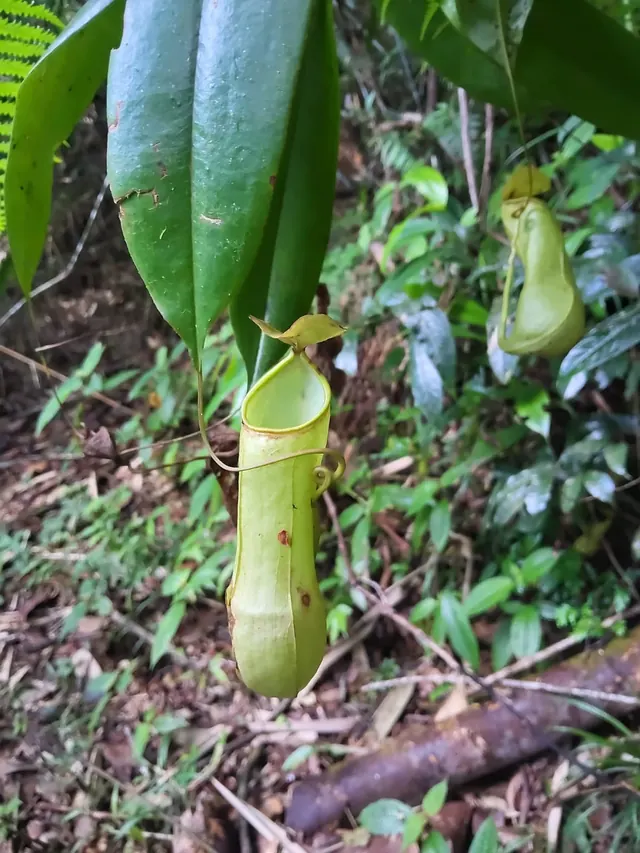
Scientific name: Nepenthes distillatoria
Local name: Badura
Type: Carnivorous plant, endemic to Sri Lanka
At first glance, the hanging pitchers can look like little cups tucked beneath the leaves. They belong to a plant, and their shape has a purpose: pitcher plants trap insects and obtain nutrients from them. Badura is a reminder that the forest’s surprises are not limited to animals.
Nepenthes distillatoria is the only naturally occurring Nepenthes species recorded from Sri Lanka. It grows in wet habitats, including forest and more open areas. On a guided walk, look for the hanging pitcher shapes rather than expecting a flower to announce the plant.
Enjoy the details without picking the pitchers or pouring out their contents. Ask your guide to point out the plant and explain what you are looking at.
Learn more: Nepenthes distillatoria · Kew’s guide to carnivorous plants.
Kahibella: the Sri Lanka blue magpie
Scientific name: Urocissa ornata
Local name: Kahibella
Type: Bird, endemic to Sri Lanka
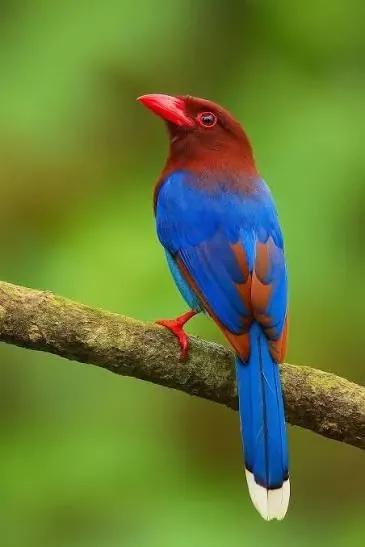
The Sri Lanka blue magpie is hard to forget once you have seen it clearly. Its bright blue body contrasts with a chestnut head and red bill. A long blue tail with white tips makes the outline just as distinctive as the colours.
This member of the crow family is found only in Sri Lanka and is associated with the island’s wet-zone forests. A photograph makes its colours easy to study, but spotting a moving bird through branches takes patience.
If birds are the main reason for your visit, our specialist bird-watching experience gives you time to listen and observe. Tell your guide that you are interested in Kahibella, while keeping your expectations open: a sighting is never a promise.
Learn more: Sri Lanka blue magpie.
Pala Polaga: the Sri Lankan green pit viper
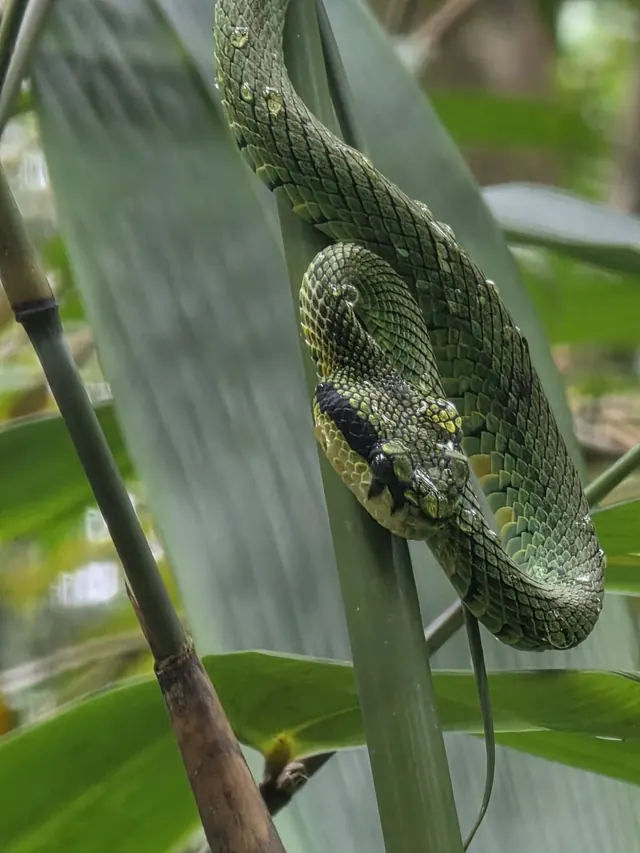
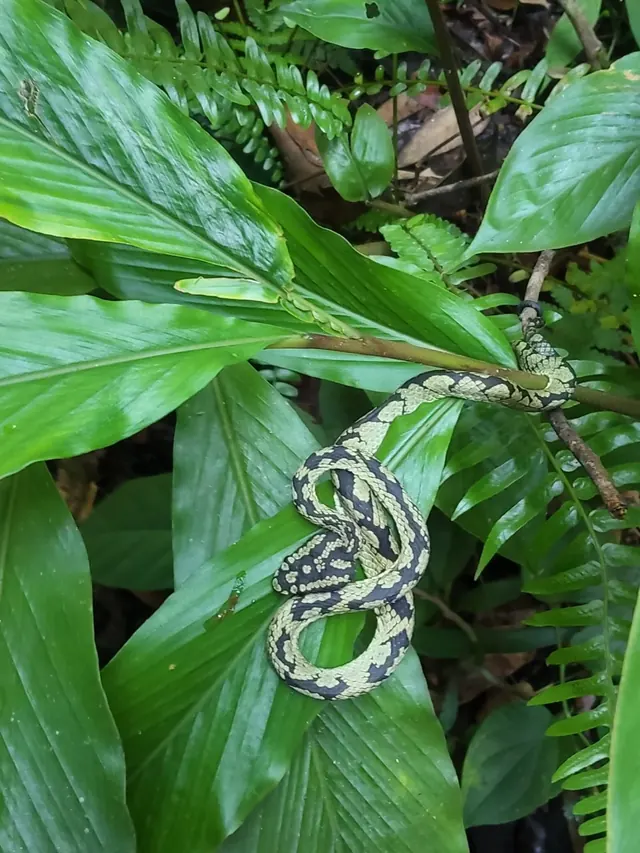
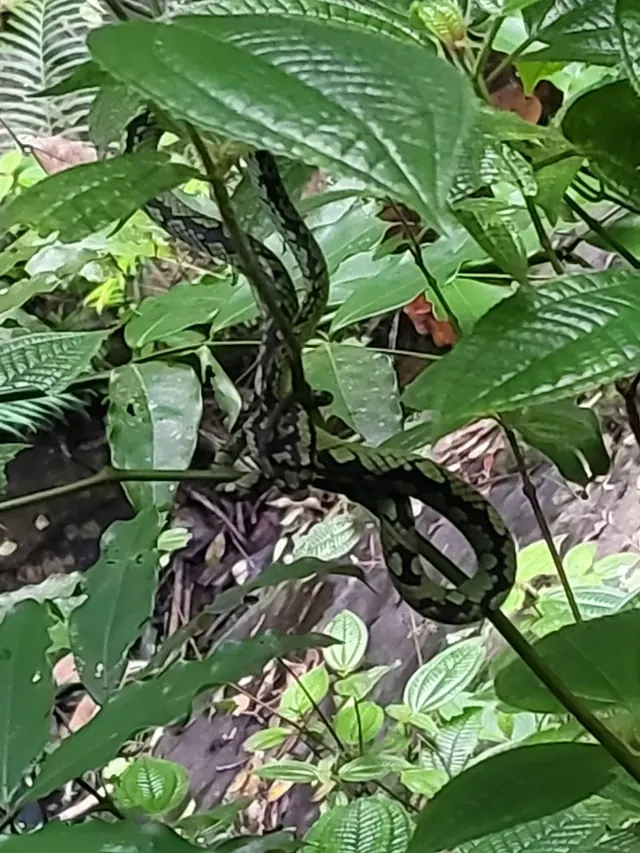
Scientific name: Craspedocephalus trigonocephalus
Local name: Pala Polaga
Type: Venomous snake, endemic to Sri Lanka
A patterned coil among green leaves can be easy to overlook. The Sri Lankan green pit viper often has a green body marked with dark patterns, though its colour and markings vary. Its broad, triangular head is another characteristic feature.
You may encounter the older scientific name Trimeresurus trigonocephalus in books and other references. It refers to the same species discussed here.
This is a venomous snake. Observe it from a distance, stay with your guide and never touch, handle or move it for a photograph. The photographs in this article let you study its appearance without needing to get close in the forest.
Learn more: Craspedocephalus trigonocephalus · The Reptile Database.
Ang Katussa: the hump-nosed lizard
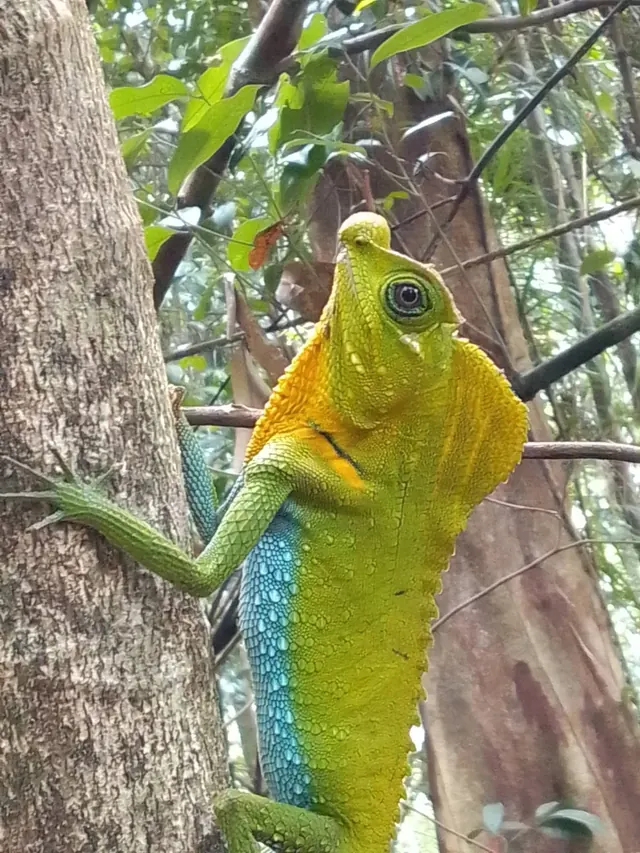
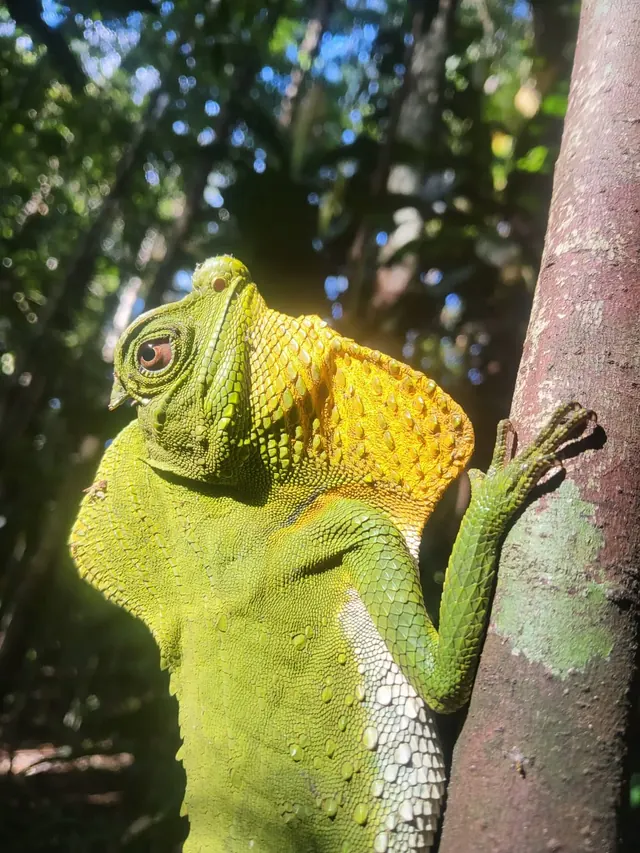
Scientific name: Lyriocephalus scutatus
Local name: Ang Katussa
Type: Lizard, endemic to Sri Lanka
The lizard in these photographs has the kind of face that makes you pause. Its raised head profile gives it the name hump-nosed lizard. It is also called the lyreshead lizard, and belongs to the agamid family.
Lyriocephalus is the genus; Lyriocephalus scutatus is its single living species. It inhabits Sri Lanka’s wet-zone forests. Males can be striking green with a yellow throat, while females and juveniles may look different.
Watch the supplied video for a closer look, then compare the head and throat with the still photographs. During a walk, let the animal remain where it is: a quiet observation is more rewarding than trying to make it move.
Learn more: Lyriocephalus · The Reptile Database.
Explore the forest with a specialist guide
You do not need to know every scientific name before arriving. Learning a few local names gives you a starting point, and your guide can help connect those names with the details in front of you.
Choose the Sinharaja Wildlife Discovery Trek for a broader search for forest life, or the Bird Watching Experience if birds are your main interest. Share your priorities when planning your visit so the experience can be matched to your time and interests.
All local names in this guide use the spellings supplied by Sinharaja Tour Guides; English transliterations may vary. The magpie image was supplied for this article. The plant, snake and lizard photographs and lizard video come from the supplied rainforest collection.
Let’s plan your time in Sinharaja.
Tell us your date, group size and interests. We’ll help you choose a suitable experience.
Plan your wildlife visit